Long after I have forgotten what it is like to live between walls teetering at the edge of legality, in a space curdling with uncertainty, and a neighbourhood moving rapidly towards oblivion, news from back home travels unceremoniously into my Houston apartment with the mundane violence of a headline.
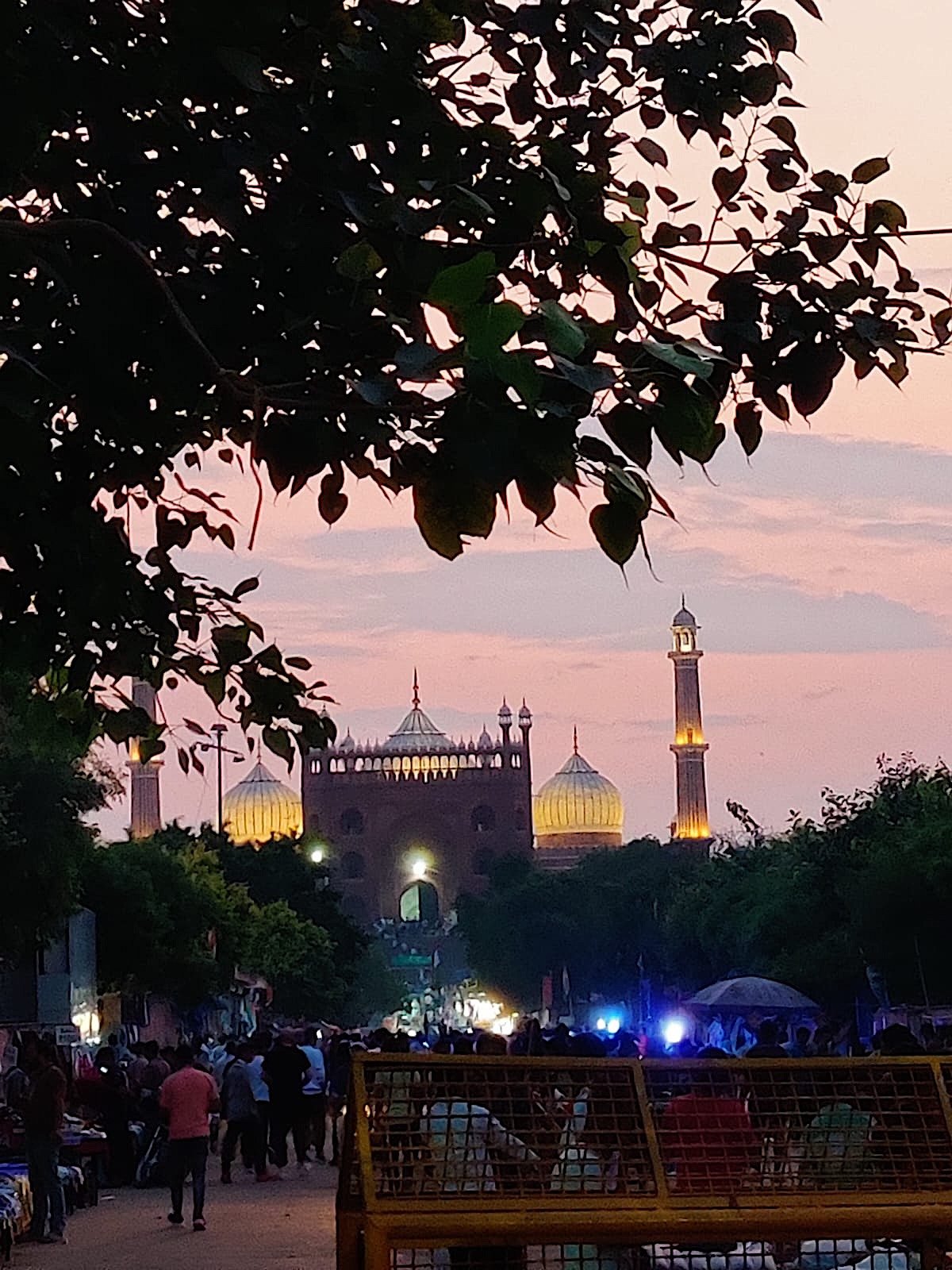
On the night of January 7th 2026, the area around Turkman Gate, a Muslim-majority neighbourhood in Old Delhi—once folded into the imperial memory of Shahjahanabad—was jolted by the arrival of bulldozers. Within minutes, the area started functioning like a disputed border. A demolition drive near Faiz-e-Ilahi Mosque carried out by the Municipal Corporation of Delhi—always accompanied by a heavy police deployment—triggered a very familiar Delhi sequence: a sudden tightening of the already narrow lanes, like an urban heart attack, restriction of movement, anxiety over homelessness, and whispers of possible clashes. In the days that followed, journalists reported of an area held in place by barricades.
Such demolition drives in Delhi begin at the edge of legality, in what the prominent Indian social worker and author, Harsh Mander, calls “zone(s) of enduring illegality”. These are often areas inhabited by the city’s Muslim and working-class populations. Mander’s phrasing holds together the administrative contradictions that govern everyday life for minorities in India’s capital city, where government bodies regulate settlements just enough to extract labour and rent from them, only to describe those same neighbourhoods as “encroachments” when the time comes to clear land or perform “decisive governance.”
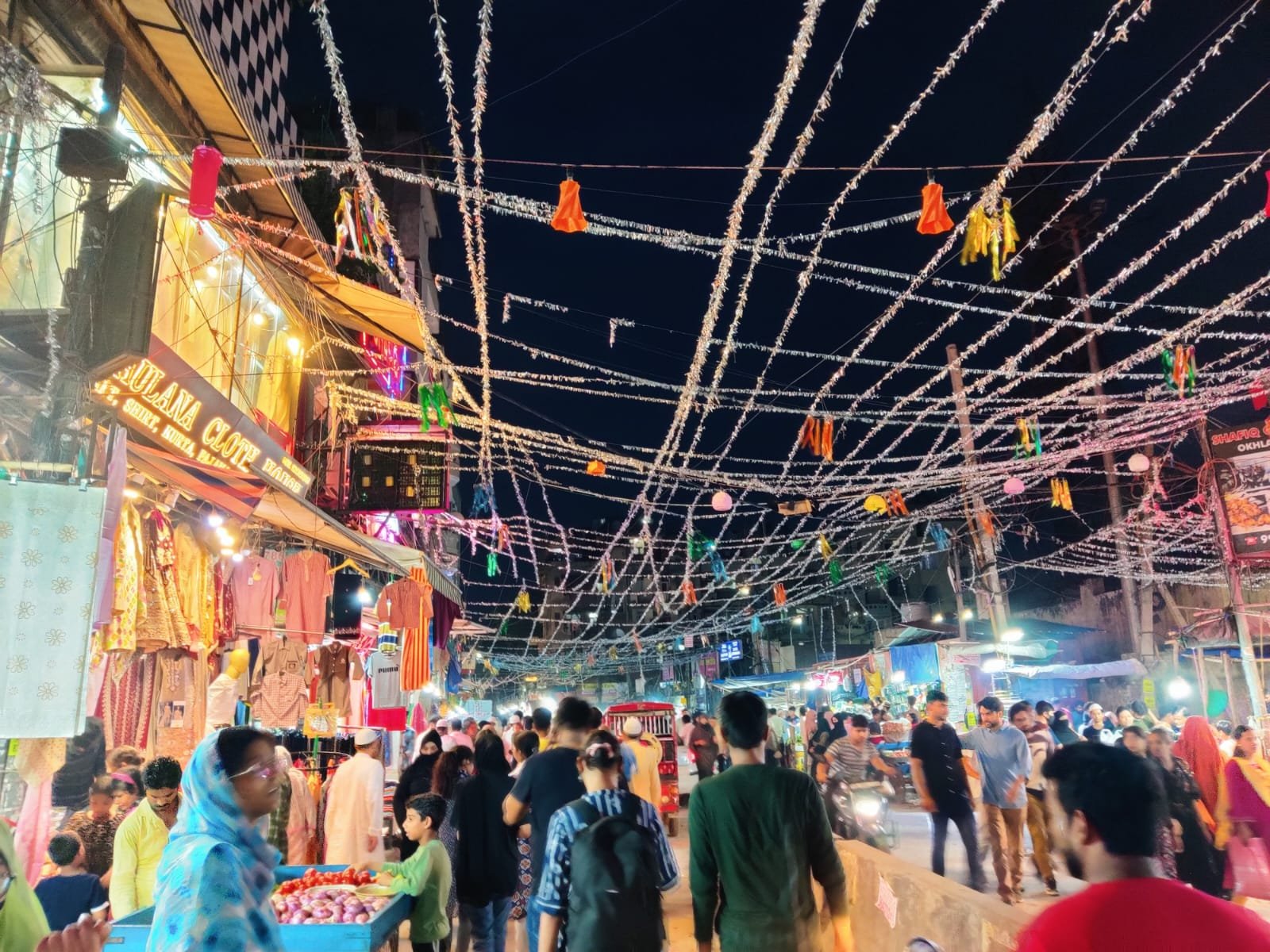
The familiarity of this legal fiction manifests in the architecture of these vulnerable spaces. Houses are built with an awareness of impermanence. The lanes in these neighbourhoods are deliberately narrow, as if widening them would extend an invitation to the bulldozers. For most Muslims in Delhi, this is not unfamiliar. Through “decisive governance”, localities like New Delhi’s Jamia Nagar, Seelampur, Welcome Colony, Nizamuddin, and parts of Old Delhi are routinely targeted with eviction notices. But what makes this latest episode especially telling is how quickly a rumour gets translated into reality.
In January, The Indian Express reported that social-media posts falsely claimed the mosque was being demolished. This coverage drew a crowd that had grown up rehearsing the trauma of the Babri demolitions and the riots that followed, rehearsals that take place in small homes that always remind you of how contingent shelter can be. In Delhi—a city shaped as much by its diverse migrant population as by the long afterlife of Partition and communal riots—streets quickly get redesigned by fear, speculation, and the anticipatory logic of communal harm way before the authorities deploy ritual violence on the people. The structural environment of India’s capital city and its surrounding areas has long been shaped by informal power, with communalism accelerating the dynamics. It is tempting to file this last Turkman Gate incident as a “law and order situation”, a one-off flare-up at the intersection of courts, municipal authority, and crowd violence. However, such an interpretation misses the lesson Delhi keeps teaching us, noisily and repeatedly: Communalism in the city is not just rhetoric, but also urban practice. Communalism has long shaped how neighbourhoods are (un)planned, how housing is exchanged, how public space is patrolled, and how people learn to read the street and infrastructure.
The city’s communal landscape did not begin with WhatsApp forwards, even though it has been significantly exacerbated by such instant messaging trends. Long before social media learned the city’s fault lines, Delhi’s governance and institutions had already mapped, named, and policed them. In his dissertation, City on the Move, historian Saeed Ahmad gives an account of Delhi’s twentieth century “communal geography”, wherein the police and municipal authorities attempted to divide the city into Hindu, Muslim, and “mixed zones”. These “mixed” spaces were especially policed through schemes designed to pre-empt and prevent riots. Muslim areas were created as “safe zones” in the wake of the Partition riots, with the population density in such zones increasing significantly after the “Emergency” era forced sterilisation programmes that disproportionately affected India’s Muslim population, causing them to seek community, often out of fear. By the 1990s, the rise of Hindu militias and routine communal riots had pushed the city’s Muslims to its borders.
This older history of Delhi provides a blueprint for understanding a city heavily defined by spatial segregation. Communalism in India’s capital city did not appear after the built environment; it was a part of its foundational logic. But what began as protection has acquired newer, more negative meanings over time. From “sensitive areas” to “zones of trouble” to the hermeneutics of suspicion summed up in the labels like “mini-Pakistan”. As religious discrimination becomes normalised in Delhi’s rental market, Muslims are increasingly being turned away from homes in predominantly Hindu neighbourhoods, and pushed into already crowded enclaves. Each time a Muslim is turned away from a "mixed neighbourhood", population density of the "ghettos" increases even more, making living conditions worse as people struggle for basic resources. Such communal trends consequently get absorbed into how the city is imagined, administered, maintained, and repaired. A walk through the narrow lanes of Old Delhi or Batla House narrates this story of architectural dilapidation in shocking detail.
What does it mean for a neighbourhood to be developed for safety only to be inherited as precarity?
The architecture in these spaces of the city is always performing two functions at once. First and more obviously, it shelters. Second and more subtly, it constantly anticipates the possibility of defense from processions, penalty and eviction notices, mobs, and more recently, from the state itself. Sufficient time spent in one of these areas, will readily reveal the signs of vigilance: the sudden hush that descends when a police vehicle enters; the use of shop shutters to send ricocheting signals to close through a neighbourhood.
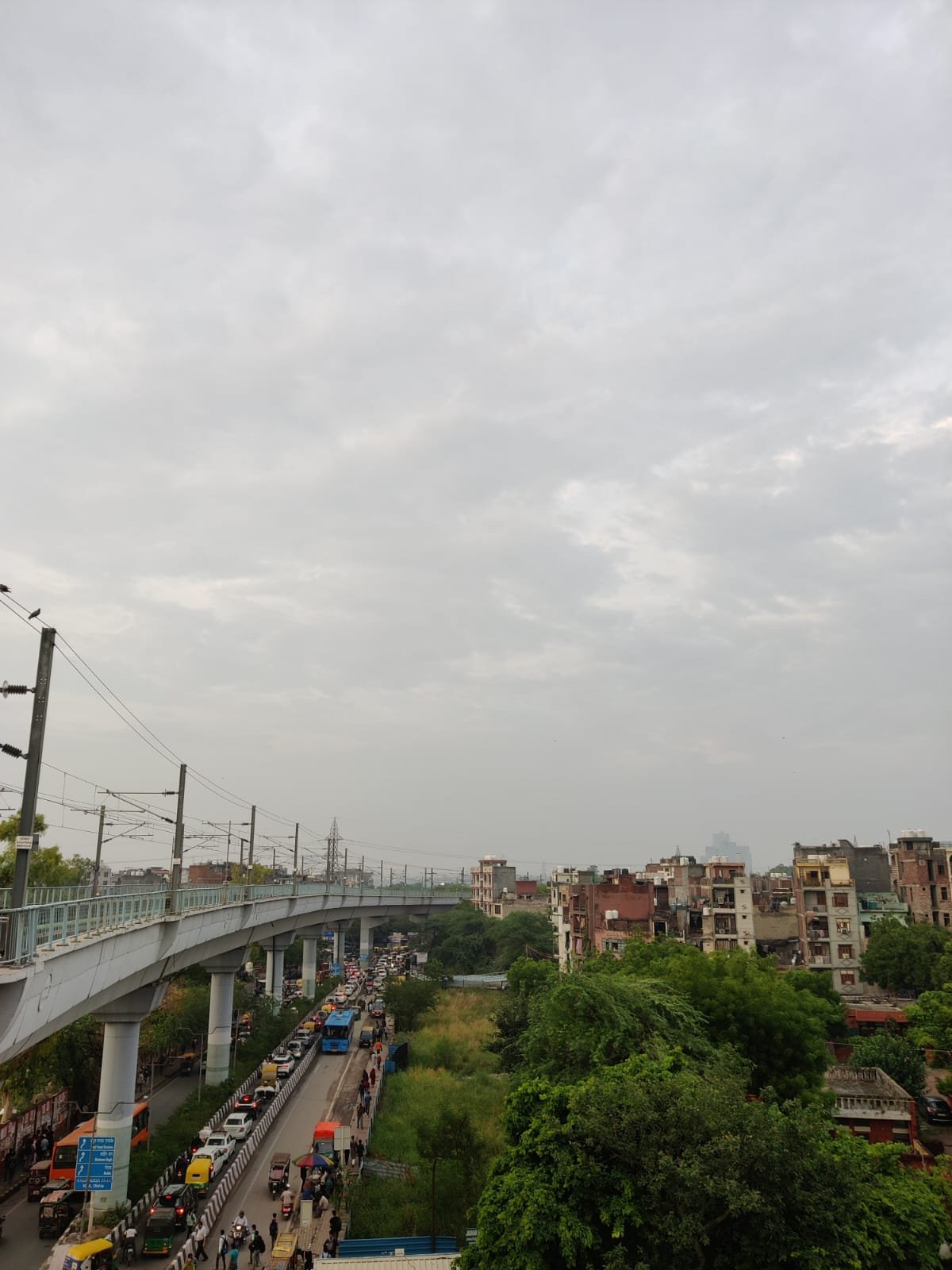
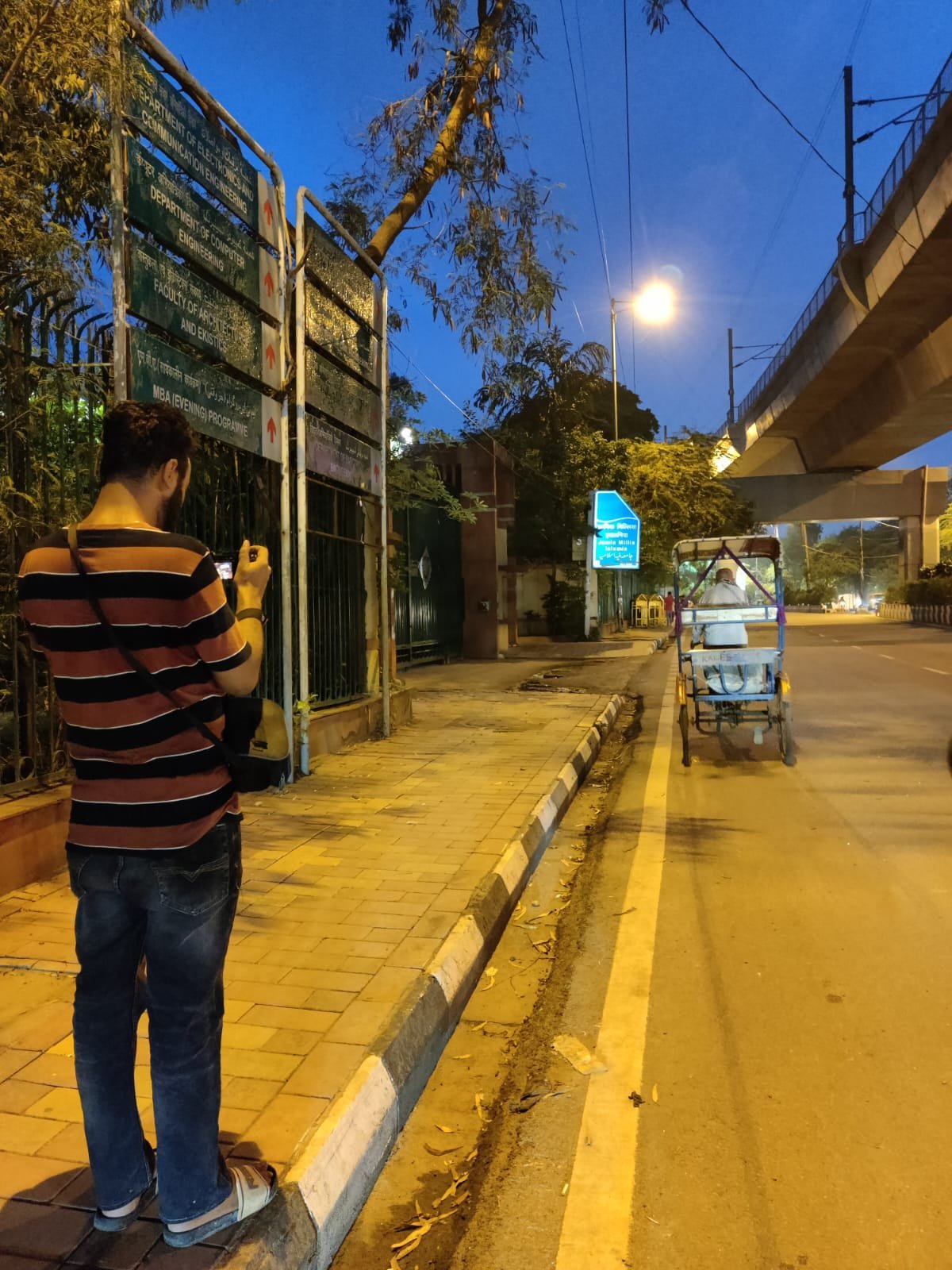
During the years that I spent in Delhi, I learnt to see barricades as a kind of pop-up architecture. They were moveable, always justified as measures of crowd control. They were also profoundly pedagogical, teaching us which streets are “allowed” to be public, and when. To outsiders, they marked our neighbourhoods as volatile and suspicious. Consequently, efforts to get home are routinely hindered by rickshaw wallahs refusing to go to “that area”, Uber drivers cancelling rides after they have asked: “Which locality?”, and the absurd irregularity of bus service to and from the area. These segregated “ghettos” of Delhi have become lessons in how communalism shapes spaces not only through spectacular and volatile events but also—and more insidiously—through the everyday economy of housing and rituals of living.
Just a few years into the BJP rule in India, the bulldozer had already become a celebratory symbol in the majoritarian public sphere. It has quickly turned administrative claims into immediate spatial and material reality, often without due process. The Housing and Land Rights Network documents the increase in evictions and demolitions across the country. Their data reveals that 740,000 people were forcibly evicted and more than 153,000 homes were demolished from 2022-2023. Furthermore, Delhi is not peripheral to this trend; it is in fact, explicitly named as a site of large-scale demolitions, including before the 2023 G20 Summit with 280,000 people evicted in Delhi alone.
This is also where the “enduring illegality” of Delhi’s informal settlements becomes weaponised. Demolition is not simply a technique of urban renewal; it has also become a ritualised form of punishment commonly called “bulldozer justice”, which is typically deployed after communal tensions and protests. Across India, punitive demolitions specifically target Muslim families and businesses, impacting thousands of people.
What are the ramifications for when demolition becomes a spectacle of state power rather than a bureaucratic procedure?
The recent Turkman Gate episode reveals the ramifications of demolition with a stark clarity: a false claim about a mosque becomes enough to redraw the street for days. When entire neighbourhoods live inside a forecast, residents rarely wait for official notices. Instead, they respond to rumours. Lanes become narrower as crowds gather. Crowds gather because a bulldozer appears. A bulldozer appears because the space has already been coded in the public imagination as a threat to security. Seen in this way, Delhi’s communalism has always been spatial. The question is whether we will continue to treat its spatial violence as incidental or whether we will name the pattern for what it is: a deeper entrenchment of the communal divide that has always lingered as a national spectre.
Delhi, to me, is a city repeatedly redesigned through the persistent management of Muslim life, a city where “planning” often means deciding which homes can be designated as temporary, and which streets can be transformed into borders. Through intergenerational repetition, the pattern has become predictable.
*
Related:
India’s electoral roll revision threatens democracy and Muslims, say critics
‘Lawrence is karma’: the gangster who became an icon of Modi’s India
Narendra Modi
 Unwritten Lives uses only essential cookies required for basic functionality.
We do not use analytics, tracking, or advertising cookies.
Unwritten Lives uses only essential cookies required for basic functionality.
We do not use analytics, tracking, or advertising cookies.